



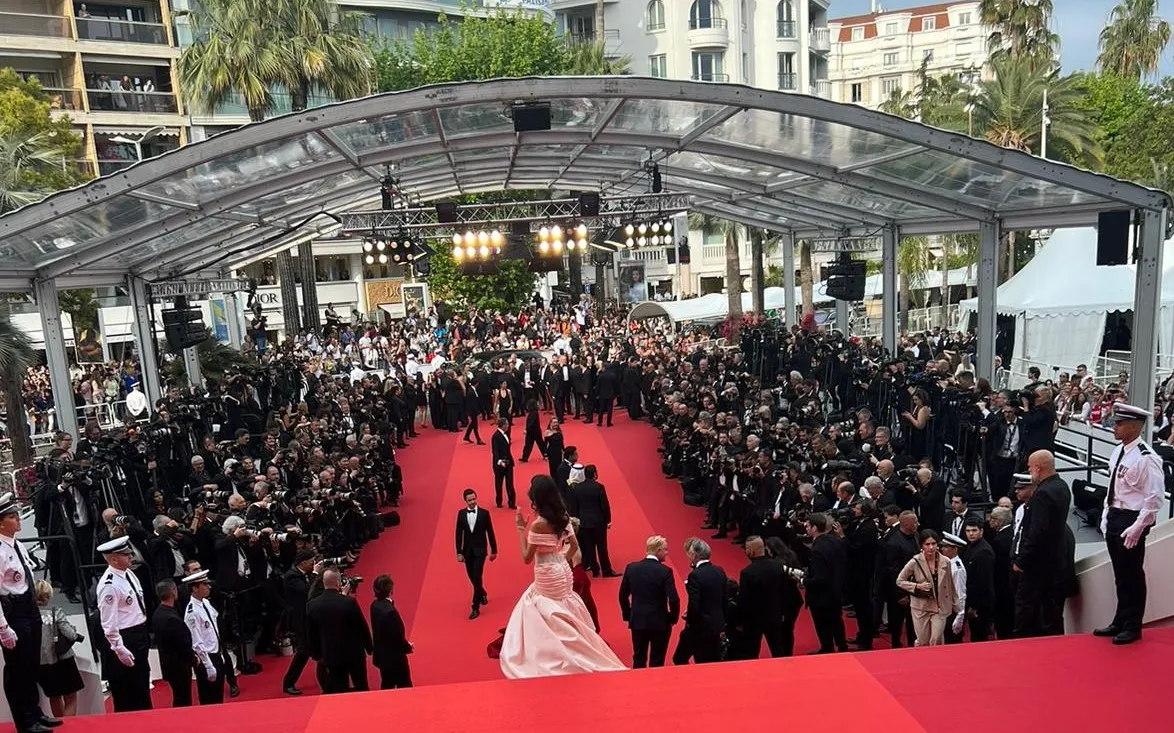
The Cannes Film Festival exists as a duality. To the public, it is a spectacle of red carpets, standing ovations, and cinematic prestige. For the industry, however, the Palais des Festivals is merely the ornate facade for the Marché du Film—a brutal, high-stakes environment where the primary currency is not artistic applause, but transactional velocity.
Each year, thousands of producers arrive on the Croisette with compelling scripts and polished lookbooks, expecting creative vision to secure their future. Yet the majority depart with a calendar full of meetings and a complete absence of executed deals. This failure is rarely a reflection of creative quality; rather, it is a diagnosis of structural rot. Creative merit is a prerequisite, not a deal-driver; market failure is almost exclusively a failure of the capital and rights architecture.
In the Marché, success is not determined by the strength of the narrative alone, but by a project’s “structural alignment”—the degree to which its financial, legal, and commercial components are ready for immediate friction-free acquisition.
The disconnect lies in the “Reality Gap.” Producers often mistake a transactional marketplace for a networking event. In the Marché, success is not determined by the strength of the narrative alone, but by a project’s “structural alignment”—the degree to which its financial, legal, and commercial components are ready for immediate friction-free acquisition.
The Objective Trap: Execution vs. Exploration
One of the most common tactical errors is attending the market without a surgically defined objective. In an environment as compressed and expensive as Cannes, “exploring the market” is a signal of fundamental weakness. When a producer cannot explicitly state whether they are seeking a sales agent, negotiating territory pre-sales, closing equity, or structuring a co-production, their presence becomes a liability.

In the Marché, conversations must be directional rather than informational. Acquisitions executives and sales agents possess an informed instinct for ambiguity; they can sense when a producer is “checking the pulse” rather than executing a strategy. This lack of direction dilutes the producer’s power, as buyers prioritize projects that offer a clear path to liquidity. In this marketplace, ambiguity is not a strategy—it is a signal of a high-risk profile.
Creative Success vs. Market Readiness
A project may be well-written, expertly shot, and festival-worthy, yet remain entirely unready for the international market. Creative readiness and market readiness are distinct metrics, and conflating them leads to premature exposure that can compress a film’s long-term value. Markets are designed to amplify what is already structurally sound; they do not exist to repair positioning gaps. A project is only market-ready when it satisfies the following structural requirements:
- Genre Saturation Analysis: Evidence that the project does not overlap with a current surplus of similar titles in the global pipeline.
- Cast Leverage Valuation: Recognition of talent that provides a quantifiable uplift in specific territory valuations.
- Territory Behavior Alignment: Data-backed projections of how the film fits into regional distribution windows.
- Capital Stack Transparency: A logical and unencumbered financial hierarchy that identifies exactly where a buyer’s investment sits.
- Rights Architecture: An unencumbered chain of title and a clear rights map to prevent deal-flow friction during due diligence.
In this marketplace, ambiguity is not a strategy—it is a signal of a high-risk profile.
The Two Cannes: Prestige vs. Territory
Producers frequently sabotage their own negotiations by speaking “festival language” in a “sales language” environment. While the Festival honors prestige, the Marché is governed by territory and recoupment. Sales agents do not buy stories; they buy recoupment velocity.
In the market ecosystem, distributors evaluate risk relative to their existing slate composition. A “no” from a buyer is often not a rejection of the film’s quality, but a reflection of a slate gap or an over-exposure to a specific genre. Understanding that buyers are managing a portfolio—not just watching a movie—is critical for professional positioning.
“Prestige may elevate perception. Structure closes deals.”
Precision as Professionalism: The 20-Minute Window
The reality of Cannes is a schedule dictated by 20-minute increments. Pitching “blind”—without exhaustive research into a buyer’s specific mandate, recent acquisitions, and budget comfort range—is more than a tactical error; it is a breach of market etiquette that signals a high-risk profile to acquisitions executives.
Precision is the ultimate form of leverage in a compressed timeline. Professionalism is signaled when a producer knows exactly why their project fits a buyer’s specific portfolio needs. In a high-pressure environment, generic pitches are viewed as a waste of a finite and expensive resource: time. Preparation ensures that the market’s efficiency works for the producer rather than against them.
Cannes is a Cycle, Not a Week
The high energy of the Croisette is often mistaken for genuine progress. However, momentum at Cannes is built in the months prior and solidified in the hours following. Treating the market as a standalone week is a strategic failure.
- Pre-Market Outreach: Objectives must be defined and meetings confirmed weeks before the first screening.
- The 24-Hour Rule: In the Marché, interest has a short half-life. All requested materials—decks, screeners, or chain of title—must be delivered within 24 hours of a meeting. Failure to do so signals an inability to transact.
- Post-Market Recalibration: Interest must be categorized between “real” and “polite,” with the strategy immediately adjusted based on territory feedback.
If this cycle is executed correctly, it does not invent value—it simply ensures that the market’s efficiency recognizes the value that already exists.
The Revelation of Leverage
International markets are efficient at rewarding clear positioning, but they are equally efficient at exposing overvaluation and undefined strategies. This is why strategic representation—such as that provided by Bespoke Media Marketing (BMM) or Bespoke Media Capital Advisors (BMCA)—is vital. These firms do not engage in a volume game; they act as positioning and alignment partners.
Experienced representation utilizes pattern recognition to identify valuation compression or expansion before a producer ever hits the ground. They ensure that the project’s narrative is framed in financial terms that withstand buyer scrutiny, protecting the project from the “informed instinct” of buyers who are trained to spot structural misalignment.
“Cannes does not create leverage. It reveals it.”
Leverage is not something discovered at the festival; it is something brought to it. Strategic representation ensures that leverage is safeguarded and projected rather than eroded by avoidable errors in rights or capital structuring.
Ask Yourself: The Structural Question
The transition from a creative mindset to a transactional one is the hallmark of the professional producer. As the next market cycle approaches, the most critical question is not “Who can we meet?” but rather:
“Are we structurally prepared to transact?”
The Marché is an expensive place to realize your project is a creative success but a structural failure. Ensure the math matches the myth before you arrive.